
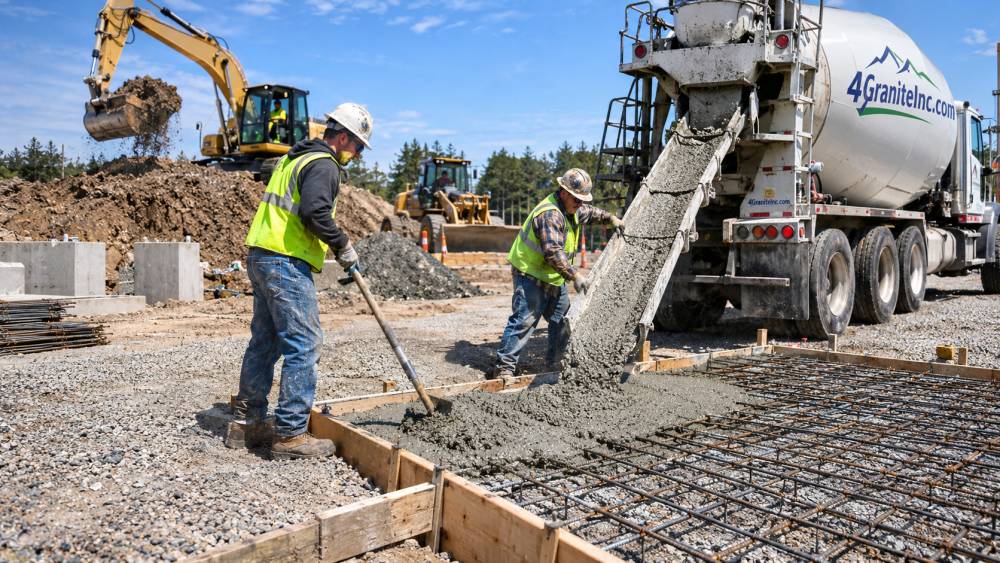
A concrete pad may look like a straightforward part of a construction project, but its performance depends on work that begins long before the first truck arrives. On industrial and commercial sites, concrete surfaces may support equipment, provide access for operations, anchor structural components, or form the base for a new facility. If the ground beneath the concrete is not prepared properly, even a well-finished slab can develop problems after the project is complete.
That is why industrial concrete work should be approached as a coordinated civil construction process. Excavation, grading, subgrade evaluation, aggregate placement, drainage, reinforcing steel, concrete placement, curing, and final inspection must all support the intended use. 4Granite Inc. brings general engineering and heavy civil construction experience to projects involving site preparation and concrete-related work in Southern California and beyond.
Every Strong Concrete Installation Starts Below the Surface
The finished surface gets most of the attention, but the subgrade and supporting layers play a major role in how a pad performs. Soft areas, uncompacted fill, trapped water, or inconsistent elevations can cause uneven support. Under repeated equipment loads or vehicle traffic, those weaknesses may become visible through settlement, cracking, or deterioration.
Site preparation begins by reviewing plans, survey information, grading requirements, and any available geotechnical recommendations. Crews then remove unsuitable material as directed, establish elevations, and prepare the soil to meet project specifications. Where required, a compacted aggregate base creates a uniform working platform and supports load distribution beneath the concrete.
The correct preparation method depends on the soil, the design loads, site drainage, and the engineer’s requirements. There is no single base thickness or compaction method suitable for every industrial project.
Grading and Drainage Protect the Investment
Industrial concrete pads frequently connect to roads, buildings, equipment areas, or utilities. Their elevations must fit the surrounding site so vehicles can travel safely, water can drain where intended, and adjacent structures are not exposed to avoidable runoff.
Poor drainage is a common source of long-term maintenance problems. Water can collect against foundations, saturate the supporting soil, wash out nearby material, or create unsafe working conditions. Proper grading, planned drainage routes, and coordination with existing stormwater features help protect the finished work.
On active facilities, contractors must also consider access during construction. Maintaining routes for deliveries, service vehicles, emergency access, and ongoing operations can affect the sequence of excavation, forming, and pouring. Effective staging is as important as the finished elevations.
Formwork, Reinforcement, and Embedded Components
Once the base is ready, crews establish forms to control the geometry, thickness, and edges of the concrete placement. Forms must be stable enough to maintain their positions during pouring and finishing. Dimensions, slopes, and elevations should be checked before concrete arrives because corrections become much more difficult after placement begins.
Many industrial pads include reinforcing steel, welded wire reinforcement, or other engineered reinforcing systems. The design determines the type, spacing, placement, and required concrete cover. Reinforcement needs appropriate supports so it remains in its intended position during the pour; simply laying it on the ground does not achieve that objective.
Anchor bolts, sleeves, conduits, drains, utility penetrations, and embedded plates may also be part of the work. These features should be coordinated early with equipment vendors, electricians, mechanical contractors, and other trades. A misplaced anchor or missing conduit can create expensive modifications to an otherwise successful concrete installation.
Concrete Placement Requires Timing and Coordination
Concrete placement is a team effort involving ready-mix delivery, access planning, labor, equipment, finishing, and inspections. A good pour plan considers truck routes, expected delivery intervals, the size of the placement, weather conditions, equipment availability, and where crews will begin and end their work.
During placement, concrete must be distributed and consolidated according to the design and applicable procedures. The goal is to achieve the required geometry and a sound, consistent installation without displacing reinforcement or embedded components. Finishing methods should suit the intended service: an equipment foundation, exterior service pad, and vehicle-access surface may have different performance and texture requirements.
Hot, dry, or windy conditions can affect workability and surface moisture, especially in Southern California’s High Desert. Crews need a plan for changing conditions rather than relying on a fixed schedule regardless of the weather.
Curing Is Part of Construction, Not an Afterthought
Concrete continues to develop strength after it is placed. Proper curing helps maintain the moisture and temperature conditions required for that process. The specified curing method and duration depend on the mix, site conditions, engineering documents, and applicable requirements.
Opening a new surface to equipment too soon can undermine the investment made in the earlier stages. Contractors and owners should coordinate access restrictions, any required strength verification, and the point at which the pad can safely receive its intended loads. The schedule should account for curing from the beginning, not treat it as unused time at the end of the project.
Quality Control and Documentation
Industrial projects often require checks at several stages: verifying subgrade conditions, confirming base elevations, inspecting forms and reinforcement, reviewing embedded items, and documenting concrete placement. Depending on the scope, the project may also require material tickets, field testing, sampling, inspection reports, or strength-test results.
These steps support accountability and allow issues to be resolved while they are still accessible. For example, checking an anchor-bolt template before a pour is far easier than discovering incorrect alignment during equipment installation. Consistent communication between the owner, engineer, contractor, and inspectors helps prevent those costly surprises.
Concrete Work in Active Facilities and Remote Locations
Not every concrete project takes place on an open, undeveloped site. Facilities may need improvements while operations continue nearby. Others may be remote locations with limited staging room, long material delivery routes, difficult ground conditions, or restricted work windows.
Those conditions increase the importance of planning. Dust control, traffic separation, safe equipment movement, utility protection, and environmental requirements may be necessary throughout the work. Contractors must also coordinate with other trades whose installations connect to or pass through the concrete.
4Granite’s published portfolio includes concrete and civil support work associated with a warehouse construction project, including demolition, aggregate base preparation, concrete placement, trenching, utilities, and asphalt paving. That combination illustrates why coordinated sitework matters: a slab or pad rarely exists in isolation from the rest of the facility.
Choose a Contractor Who Understands the Whole Site
An industrial concrete pad is successful when it fits the larger project. Proper subgrade preparation supports the design; drainage reduces avoidable maintenance issues; accurate forms and reinforcement support performance; and coordinated placement keeps the work progressing safely. Each stage affects the next.
4Granite Inc. specializes in general engineering and heavy civil construction, with documented experience in site preparation, earthwork, utilities, construction support, and concrete-related projects. For owners and project managers, that broader perspective can be useful when a concrete scope connects with grading, trenching, access improvements, or other infrastructure work.
Plan Your Next Industrial Sitework Project
If your project involves a concrete pad, equipment foundation, site improvement, or related civil construction work, the first step is to review the intended use, site conditions, drawings, and schedule. Early coordination helps define the scope and identify any excavation, drainage, access, or utility requirements before construction begins.
Contact 4Granite Inc. at 4GraniteInc.com or call (760) 403-3376 to discuss your industrial construction and sitework needs.